
Hemlata Gulia
Kezoma Village in Nagaland has emerged as a frontline model and “torchbearer” for the revival of Shree Anna (millets) in India. Located 40 kilometers from the state capital Kohima, this small community achieved a landmark agricultural turnaround after millet cultivation had completely ceased in the area for more than a decade. The story of Kezoma exemplifies how grassroots community action, paired with targeted government intervention, can successfully bring back climate-resilient, traditional superfoods.
The Timeline of Kezoma’s Millet Renaissance
The Decline: By the early 2020s, an entire generation in Kezoma had grown up completely unfamiliar with millets. The crop—once a foundational staple grown by their grandparents—was entirely replaced by modern grains and subsidized rice.
The Re-entry (2024): In collaboration with the Kohima District Agriculture Office, the Kezoma Village Council initiated a systematic revival campaign. They sourced indigenous seed varieties from across the state and mobilized local farmers to plant a baseline of one hectare.
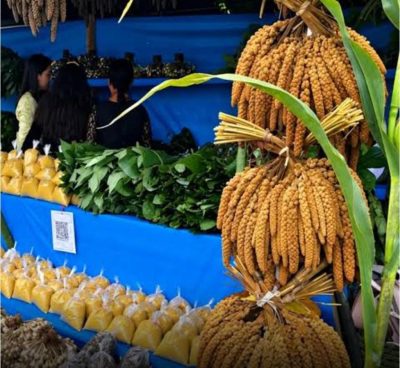
The Scaling (2025–2026): Production scaled aggressively. In 2025, the village hosted its inaugural Ochü Millet Festival, selling roughly 4,000 kg of grain and generating ₹13–14 lakh in single-day revenue. By late 2026, the area under cultivation expanded dramatically, pushing annual yields to an estimated 12,000–13,000 kilograms (12–13 tonnes).
How Kezoma Became a “Model Village“
The village didn’t just plant seeds; it solved the systemic roadblocks that usually cause millet farming to fail:
1. Eliminating Drudgery Through Mechanization: Traditional millet processing is notoriously labor-intensive. The introduction of mechanical de-husking mills and specialized threshing machines reduced post-harvest labor drudgery by roughly 80%, making the crop economically attractive to younger farmers.
2. Pioneering Double-Season Cropping: To maximize land use, agricultural departments introduced a second-cropping cycle for millets. Backed by sprinkler irrigation infrastructure under the Pradhan Mantri Krishi Sinchayee Yojana (PDMC), Kezoma successfully expanded out-of-season cultivation.
3. Cultural and Economic Integration: The Ochü Millet Festival successfully linked culture with commerce. By targeting health-conscious consumers (such as diabetics looking for rice alternatives), the village established highly profitable direct-to-market consumer avenues.
National Recognition via Mann Ki Baat
Kezoma’s success resonated nationwide when Prime Minister Narendra Modi highlighted the village in his Mann Ki Baat radio address. The Prime Minister praised Kezoma as an exemplary case study of Indian youth and rural communities bridging heritage with modern sustainable development, perfectly embodying the spirit of India’s national Shree Anna mission.

